The Scarlet Letter by Nathaniel Hawthorne was one of our class readings. It is a dramatic story about life
in Boston during the 17th century. Its main theme is women adultery, at a time when women were even more discriminated and
disrespected and Puritan values prevailed in the emerging
village of Boston. The plot is set in a dark scenery of resignation,
cowardice, sorrow and grief, entailed by an intensive submission to the
Puritan moral. Triggered by the courageous personality of Hester Prynne,
the guilty and confused personality of Reverend Dimmesdale and the lost
character of Roger Chillingword, the narrative exposes us to the horrible events of those times, including the witch trials. Those were trials where people were easily accused and punished for
witchcraft. The intriguing point is that there were no proofs not even a reasonable argument for the suspicions. Arthur Miller, another American writer of those times, portrayed such trials in the play The Crucible, which later became a film starred by Daniel De Lewis and Winona Ryder.
The novel The Scarlet Letter and story The Crucible are an
opportunity to understand how an ideology allied to personal beliefs and
interests can corrupt genuine human values such as reason, compassion
and honesty.
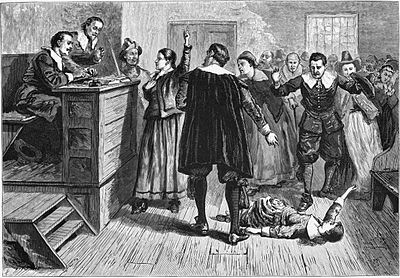 |
| Image from: http://en.wikipedia.org/wiki/Salem_witch_trials Text by Kaciana Fernandes Alonso, 2013 for Inglês e Cultura blog. |


